

Regional Conflict and Small Arms
 Since the end of the Cold War, war between nations has been replaced by civil wars between opposing regional powers, which have given birth to outflows of refugees and the breakdown of nation states. To combat this, in the early‘90s, the United Nations tried intensifying its peacekeeping operations. However, with the lessons learned from a failed intervention in the conflict in Somalia, the limits of peacekeeping work were exposed for all to see, and great powers became unwilling towards conflict interventions.
Thereafter a great deal of importance came to be attached to conflict prevention, and directly connected to this was the treatment of small arms. Although excessive small arms do not directly give rise to conflict, they escalate its intensification and stimulate its re-occurrence. According to the report of the United Nations Secretary General at the Millennium Summit in 2000, in the 10 years since the end of the cold war approximately 5 million people have been killed by small arms. Small arms are the real weapons of mass destruction. The ‘age of war’, which saw countries focus on national security, has passed and with it the ‘age of conflict’ has arrived – an age where we must consider human safety and security. With this in mind a solution to the problem of small arms becomes necessary for conflict prevention.
What Constitutes Small Arms?
Boutros Boutros-Gali, the then Secretary General of the United Nations, in his 1995 “Supplement to the Agenda to Peace”, advocated “Micro Disarmament” and drew attention to the issue of small arms. In 2001, through the efforts of the Japanese Government and others, an international, cabinet level meeting was held to discuss “All Aspects of the Illegal Arms Trade” and an 83 point plan of action was adopted. As small arms are less destructive than weapons of mass destruction, they were not regarded as a subject for disarmament during the Cold War and flowed to the battlefields of a proxy war in Central America and other regions without restriction.
Post Cold War, under the auspices of disarmament, there became a surplus of small arms arriving on the market in areas of conflicts. This excess stockpiling is now also seen as a root cause of the problem.
In the 1997 report from the UN Group of Experts on Small Arms, small arms were described as anything ranging from “small”: knives or clubs; to “large”: up to the lower limit of the Armament Registration System i.e. firearms below 100mm caliber. Limiting this to only military produced armaments, weapons are classified in three groups: (1) Small Arms– firearms used by a single individual; (2) Light Weaponry– firearms carried by multiple individuals; and (3) Landmines– munitions and explosive devices. In actual conflict most casualties are attributable to the Kalshnikov AK47 automatic rifle, which, due to its ease of repair and concealment have led to its production in over 70 countries and an estimated one hundred million being in circulation today.
Policies to Prevent Excess Stockpiling (Supply Side)
- The 2001 United Nations Conference on Small Arms produced the following proposals to prevent the excess stockpiling of small arms
- Put in place adequate domestic laws in order to prevent the illicit manufacturing and trafficking of small arms and light weaponry
- Prevent legally produced and distributed weapons from being diverted to the black market by maintaining or implementing individual weapons management, comprehensive data service, engraving of a hallmark, export standards and the destruction of surplus weaponry
- Encourage regional cooperation between customs, border patrol authorities and police in order to exercise control over illegal trafficking
- Establish a coordinative institution to relevant information available inside and outside of the country.
Policies to Reduce Excess Stockpiling (Demand Side)
In areas where conflict has ended, a ‘Culture of Arms’ often perpetuates, and without the establishment of public safety and order, accumulated weapons will not be relinquished by those who hold them. In taking steps to approach the demand side of this situation, the United Nations set out a plan of action as can be seen below:
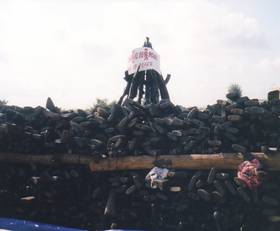
- To combine programs of ‘disarmament, discharge and reintegration into society’ for ex-combatants, with valuable activities such as redevelopment, democratization, and the firm establishment of public safety. (For example, in Cambodia “Weapons for Development” is a grass-roots drive initiated by Japan).
- To promote education and training programs to change the ‘Culture of Arms’ to a ‘Culture of Peace’.
- To encourage countries with reserves of goods, financial, and human resources to extend a hand of cooperation to the post-conflict region.
- To gain cooperation from civil society.
- To gain cooperation from civil society.
