|
|
| |
1. Capacity-building and Peacebuilding Since the end of the Cold War, the many regional conflicts breaking out all over the world have been regarded as religious or ethnic conflicts. However, it is not that simple. Relationships based on political and economic interests are in fact at the heart of what appear to be religious or ethnic conflicts. Also, it is civilians, and particularly women and children, who suffer the most as victims of these conflicts. People living at the grassroots level have been co-existing for centuries. It is when people suffer from discrimination and become politicized and radicalized that they resort to arms.
In Sri Lanka too, the conflict is considered to be between the Singhalese (Buddhists), the Tamils (Hindus) and Muslims. However, the roots of the conflict are in fact discrimination between majority and minority groups, and human rights violations rather than religious or ethnic issues. It is necessary to construct a system that enshrines the equal rights and obligations of all the people. To achieve this, a wide spectrum of people must be involved in peacebuilding efforts. The first step is to build capacity and mutual understanding through dialogue, which leads to mutual approval, acceptance, reconciliation and coexistence.
2. The Importance of Communication
Language is a significant barrier to the progress of this dialogue. The Singhalese and Muslim peoples’ use of Singhalese and the Tamils’ use of Tamil results in a communication gap. This lack of understanding is a major factor in the build-up of fear and mutual distrust.
In the North-East of Sri Lanka, conflict between the government and the anti-government organization, the Liberation Tigers of Tamil Eelam (LTTE) has destroyed the social and economic infrastructure, which has robbed many young people of educational and job opportunities. To secure food and income, they have had no choice but to enlist in the military. In the case of the Singhalese this has meant joining the government forces: in the case of the Tamils it has meant joining the LTTE. It is necessary to provide these youths with educational opportunities and the means to become economically independent.
3. Conflict Prevention Workshops
In 2000, JCCP established its Representative’s Office in Sri Lanka, Colombo. In June 2003, Mr SASAI Eiki was dispatched as JCCP’s Representative in Sri Lanka; he presently works with other members of staff to manage conflict prevention activities there. This office, in collaboration with a local NGO "National Peace Council", is running Conflict Prevention Workshops, which enable local leaders to gain an insight into the issues at the heart of conflict and learn dialogue skills. This is one element in an enlightenment process that, through exploration of the causes of conflict and mutual understanding, contributes towards peacebuilding. Furthermore, the participants contribute to the same in their hometowns by conducting small-scale workshops there. Through these activities, JCCP pursues its goal of developing a nationwide "Common Agenda" for conflict resolution at the same time as developing the capabilities of those involved in conflict prevention activities at the local level.
4. Inter-Faith Peace Conferences
JCCP co-sponsors Inter-faith Peace Conferences with the Sewa Lanka Foundation, a local NGO. At a conference in October 2001 at Trincomalee, North-East Sri Lanka, not only the leaders of the four main religions, but also ambassadors from various countries and representatives of international institutions took part in four days of lively discussions. In a society of many faiths such as Sri Lanka, religious leaders have a great deal of influence. Because of this, promoting dialogue between different religions is a prerequisite of peace.
| | | The Inter-faith Peace Conference Co-Sponsored by JCCP
in October 2001 at Trincomalee, North-East Sri Lanka | 5. Landmine Removal Project
A major obstacle in efforts towards peacebuilding in Sri Lanka is the existence of 1,500,000 landmines. As these present a very serious threat to the safe return of Internally Displaced Persons throughout the country, JCCP has decided to tackle the problem directly, and undertook a field investigation in December 2002. Based on the results of this investigation, JCCP will set-up a landmine removal center in the Vavuniya district (Northern part of the country). In cooperation with the United Nations Development Programme (UNDP) and the Danish Demining Group (DDG), JCCP is presently carrying out the necessary training of landmine removal personnel as the next step in contributing to the alleviation of this obstacle to lasting peace in Sri Lanka. | JCCP staff member Ryogo Tatsumi at a
landmine removal site |
| |
1. Cambodia’s "Culture of Arms" In Cambodia it is easy to obtain guns, which are often used instead of knives for such crimes as burglaries, kidnappings and blackmail. Nowadays it is said that a “culture of violence” is becoming widespread in the country. Cambodians who can remember the pre-war period often say, “Thirty years ago there was no such thing as a culture of violence. Cambodia was a peaceful country”.
It goes without saying that it is Cambodia’s history of civil war which has brought about such a change in the country. During the civil war, ordinary citizens were drawn into the conflict and had no choice but to own weapons for the sake of self-defence. Even after the conclusion of the war following the surrender of Pol Pot’s faction in 1998, and regardless of the fact that weapon possession is wholly prohibited by law, it is said that as many as 100,000 weapons are owned by ordinary citizens.
Cambodia was expected to become a country where it would be unnecessary to own weapons for self-defence or for attack. So why do citizens continue to own weapons? One reason is that, at a time when gun-related incidents occur frequently, people fear that they and their families will become victims if they do not protect themselves. Furthermore, guns are regarded as valuable assets that can be exchanged for cash whenever necessary. For these reasons, regardless of government demands, once people have obtained weapons, they do not readily relinquish them.
2. From a "Culture of Arms" to a "Culture of Peace"
In March 2001, JCCP established its Representative Office in Cambodia, aiming to contribute to peacebuilding in the country. Mr TANAKA Tsuyoshi (top left in the picture below), JCCP’s Representative in Cambodia, is currently supporting the collection and destruction of small arms advanced by the Cambodian government. This project is called “Weapons for Development”. It is a legally authorized collection method that emphasizes the illegality of arms ownership. In return for the surrender of arms, the project offers regional development programs such as the construction of roads and the digging of wells. In comparison with a method that simply exchanges arms for money, this method has the merits of promoting economic independence and improving public welfare. However, to carry out such a difficult task as arms collection successfully, it is important to promote a peaceful approach to problem solving, in other words, to cultivate a “culture of peace”. It is also vital to raise awareness, in each community, of the problems that can arise from the ownership of small arms.
| JCCP Cambodia Representative’s Office Staff Members |
3. Weapons for Development
In July 2001, the JCCP held a ceremony for the destruction of small arms in Kompong Chunang, north of the capital Phnom Penh. It was attended by JCCP Chairman Mr. AKASHI Yasushi and co-sponsored by the Cambodian Government and the European Union. In this ceremony, the 7,000 small arms that had been collected in the area were destroyed in front of 10,000 members of the public. During the civil war, the number of small arms in Cambodia rose from 500,000 to one million and the number of small arms collected since the end of the civil war amounts to no more than 110,000. It is estimated that each family owns one gun, and it is this kind of “culture of arms” which is a major factor obstructing the spread of the market economy and democratization. Our hope is to remove citizens’ fears that “other citizens are still keeping their weapons hidden”, through destroying weapons before their eyes.
| | | Weapons for Development Campaign |
For "Special Reports" on small arms from the field click here.
4. Improving Elementary Schools
There are a large number of elementary schools in Cambodia that completely lack toilet facilities, and many more where the facilities are inadequate. As a result, JCCP began programs to change this situation in May 2001. To improve the facilities, JCCP is active in seven provinces (including Kampong Speu) and one county, and has constructed wells and toilets at nine elementary schools. The provision of clean toilets and wells which can also be used for daily water has made a vast difference in the lives of not only the students, but also the communities overall. And while at first glance, it does not seem like these programs are related directly to conflict prevention, for JCCP, the stability of people’s livelihoods is an important foundation for Cambodian peacebuilding in the long-term.
| Children gathered around a new well built by JCCP | | |
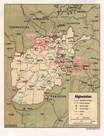
1. The Establishment of the Afghanistan Office In response to the train of events that unfolded after the terrorism of September 11th in the United States, JCCP decided to begin programs to prevent the reoccurrence of conflict in Afghanistan and Pakistan and embarked upon a number of actions. First, Mr ANDO Nobutaka of JCCP’s Sri Lanka Office was dispatched to Pakistan from October 2001 to January 2002, in order to contribute to the refugee relief activities of the Japan Platform. In the second half of December 2001, Mr Cameron NOBLE, then-Chief of International Affairs, was dispatched from the Tokyo office to Mazar-i-sharif in Afghanistan and Peshawar in Pakistan. He built up a network and carried out the research necessary for the development of the JCCP’s conflict prevention programs in the field.
In the middle of February 2002, Chairman AKASHI Yasushi and Executive Director ASOMURA Kuniaki traveled to Afghanistan and met with Hamid KARZAI, Head of the Afghan Interim Government, U.N. personnel, and NGO representatives to further develop JCCP’s plans. Then, in March 2002, Mr SASAI Eiki was dispatched to Kabul as JCCP’s Representative in Afghanistan.
| | President Akashi and Executive Director Asomura
meeting with Mr. Karzai, Head of the Afghan
Interim Government | JCCP staff member Mr Kikuchi (left), JCCP Representative Mr Sasai (Center) and local Afghanistan staff member, Mr. Raboni (right) | 2. Seeking to Prevent the Recurrence of Conflict
JCCP is involved in the following programs in Afghanistan:
a. Job-Skills Training for ex-Combatant Youths
JCCP has been working mainly with two NGOs in Afghanistan since April 2002. In total, we have jointly sponsored four job skills training courses for ex-combatant youths in Afghanistan. These courses include components on woodwork, metalwork and construction as well as daily classes on peace education and literacy aimed at preventing the recurrence of the conflict. These courses are vital as there are many questions concerning how ex-combatants can be reintegrated into society and be involved in peacebuilding in post-conflict Afghanistan. For ex-combatants who had no access to education and may have no skills other than what they learned during fighting, it is very easy to return to a conflict situation, even if peace is established. As long as ex-combatants have no alternative way to earn an income, there will always be the danger of them becoming involved in conflict again, a situation that JCCP’s job skills training courses aim to prevent. | Job-skills training for ex-combatant youths | b. Workshops on Peacebuilding
Since April 2002, JCCP has been working with CPAU (Co-operation for Peace and Unity), an Afghan NGO. Farza is one of the regions that was hardest hit by the conflicts in Afghanistan. As a result, it is in Farza that JCCP and CPAU are engaged in peacebuilding workshops to promote smoother communication and research ways to bring lasting peace to the region. In the workshops, participants learn dialogue skills and the importance of human rights in an attempt to build mutual trust between people where presently there is none. Different workshop themes are chosen for each region, thereby forming part of the process of reconstruction in Afghanistan. Issues including the rights of returning refugees and the strained relations between people in post-conflict Afghanistan are discussed in the peacebuilding workshops, which play a significant role in conflict prevention in the country. | Opening ceremony for a peacebuilding workshop | For "Special Reports" on Afghanistan from the field click here.
| JCCP opened its Middle East Representative’s Office in Jerusalem in May 2000. We ran an anti-incitement project, “prevention of stone throwing” projects, and computer training courses for Palestinian refugees in collaboration with local NGOs. However, due to the intensification of the Israel-Palestine conflict Mr. KOBAYASHI Anri, JCCP Acting Representative in Palestine, had to be temporarily recalled in June 2001. | | Children singing “Imagine” as part of
project to prevent stone-throwing | Participants engaged in a JCCP
computer training course | | |