| The Disarmament, Demobilization and Rehabilitation (DDR) of retired soldiers is one of the largest projects in which Japan is involved, in terms of Afghan recovery programs. The DDR program helps the soldiers to reintegrate back into civil society after disarming and demobilizing, either by entering the newly formed national army or engaging in various forms of vocational training. Rehabilitation is perhaps the most important element of DDR because of its direct impact on how former soldiers return to civil society. Also, it is important to note that people that benefit directly from the DDR program are the former soldiers themselves.
Having spent half their lives fighting, former combatants in Afghanistan have not had any opportunities for education or other work, and if there is to be any chance at successful social reintegration, these former combatants need active “empowerment” to pursue such opportunities. The program for rehabilitation into society covers education and work opportunities, with the United Nations presently engaged in such empowerment activities in Afghanistan. However, for ex-combatants who have spent such a long time fighting, it is important that empowerment covers not only vocational training and reintegration into new armed forces, but also involves the important concepts of how to engage in regular life in civil society as part of a wider societal community.
In Afghanistan, many former soldiers with whom I have interviewed displayed pessimism about the future, claming “my life will not go anywhere”. Few have any visions about life-planning or long-term ideas for the future of their communities and country. Now I feel that our students may not see any clear connection between what they were learning and the possibilities and opportunities in what comes afterwards.
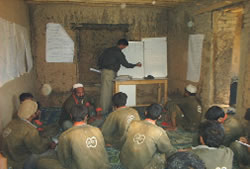
With this in mind, the JCCP Afghanistan Office’s rehabilitation programme includes a basic curriculum involving reading, writing and basic math; vocational training (specifically in metalwork); and extends to classes in peace education. Since it is only possible to evaluate the efficacy of peace education in the long-term, it is difficult to see the results at this point, but I can already sense the positive atmosphere among students in terms of co-operation with others and their communities. At the same time I can see they are starting to think about the conflict from an objective viewpoint. These changes in ways of thinking affect the ex-combatants’ overall attitude towards both the vocational training and basic education. The JCCP Afghanistan Office will continue to work on analyzing our peace education in consultation with specialists and people in the local communities so as to improve our programs and making DDR program models. Hiroya Takagi
Acting Representative in Afghanistan
Japan Center for Conflict Prevention | | | Peace education facilitator Mr. Abdullah
with former soldiers
| Peace Education Workshop | |